Residential Stair Industry Logo Design Ideas
In the bustling world of the residential stair industry, your logo serves as the first impression of your business. It speaks volumes about your craftsmanship, professionalism, and values. A well-crafted logo can set you apart from competitors, foster trust among potential clients, and reflect the unique qualities of your stairs. Let’s dive deep into the elements that make your logo impactful and ways to find inspiration for designing it.
Understanding the Residential Stair Industry
The residential stair industry is a specialized sector focused on creating safe, beautiful, and durable staircases. When conceptualizing your logo, it’s vital to grasp the specific nuances that define this industry.
Key Characteristics of the Residential Stair Industry
Craftsmanship is at the heart of every project in the stair industry. Your logo should reflect the precision and attention to detail that goes into every stair. Think about incorporating elements that symbolize this craftsmanship, like wood textures or metal finishes.
Safety is another crucial aspect. Stairs must be not only aesthetically pleasing but also compliant with safety regulations. Your logo should convey trust and reliability, ensuring customers that your products are safe.
Lastly, the aesthetic appeal of stairs—how they seamlessly blend into a home—is essential. The visual elements you choose should embody elegance and style, resonating with homeowners looking to enhance their living spaces.
Essential Elements of Effective Logo Design
Creating a memorable logo involves understanding some foundational design principles tailored to the residential stair industry.
Typography Considerations
Font selection can dramatically impact how your brand is perceived. You’ll want to choose typography that reflects the craftsmanship essential in the residential stair business. A sturdy, clean font can evoke simplicity and reliability, while a more decorative one might suggest elegance or luxury. Think about what message you want to convey and select a font accordingly.
Color Psychology in Logo Design
Color is a potent communicator. In the context of the residential stair industry, colors like deep browns, soft creams, and cool grays can represent stability, warmth, and sophistication. These colors can evoke feelings of comfort and trust. Think about how different shades resonate with the emotions you want your clients to feel.
Iconography and Imagery
Imagery is a crucial aspect of your logo. Icons related to stairs, homes, or construction tools can create an instant connection to your industry. For instance, a stylized staircase intertwined with a house silhouette can immediately convey your business's focus.
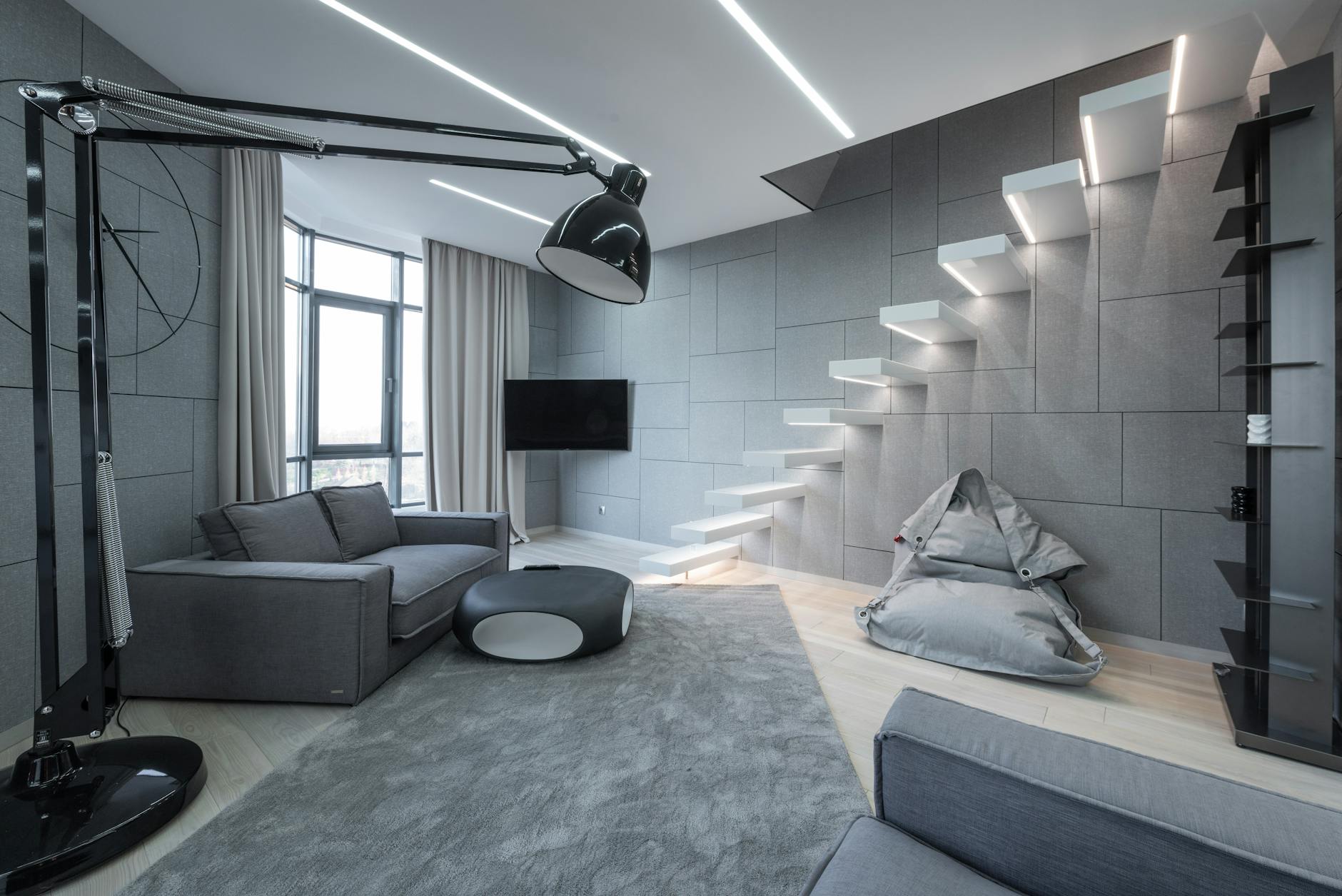 Photo by Max Vakhtbovycn
Inspiration for Logo Design
Finding inspiration is key in the logo creation process. Here are some actionable strategies to help spark your creativity.
Research Trends and Competitors
Analyzing existing logos in the residential stair industry can provide a wealth of creative insights. Look for trends in design, typography, and colors that resonate with you. Consider what you like or dislike about your competitors' logos, and use this knowledge to refine your own ideas.
Utilize Logo Maker Shop for Design Guidance
The Logo Maker Shop offers tools and resources specifically designed to help you craft your logo. You can explore various templates and customize them to align with your brand vision. This can streamline your design process, allowing for professional results without requiring extensive design skills.
Brainstorming Techniques
Utilizing techniques such as mind mapping or sketching can aid in honing your ideas. Map out attributes you want your logo to embody, or simply sketch freely until something resonates with you. Don’t be afraid to think outside the box—sometimes the best ideas are the ones that seem the most unconventional.
Case Studies of Successful Logos
Analyzing successful logos from the residential stair industry can provide valuable lessons for your design process.
Analyzing Design Choices
Look at logos that stand out in their category. Identify what makes them effective—are they simple yet memorable? Do they evoke the right emotions? This analysis will help you determine visual strategies that work well within your target market.
Lessons Learned from Competitor Logos
Competitor logos can serve as a guide in what to replicate or avoid in your design. Take note of patterns that engage customers or elements that might detract from the professionalism of a logo. By understanding these nuances, you can create a logo that’s both competitive and original.
Final Tips for Crafting Your Logo
When you're ready to bring your logo to life, keep these actionable steps in mind.
Testing Your Logo Design
Gathering feedback is crucial. Share your logo concepts with friends, family, or potential customers. Use their insights to tweak and refine your design, ensuring it resonates well with your target audience.
Leveraging Online Tools for Logo Creation
Utilize platforms like the Logo Maker Shop for easy design solutions. Professional tools can simplify the logo creation process, helping you achieve a polished look that communicates your brand identity effectively.
Conclusion
A unique and thoughtful logo is vital for standing out in the residential stair industry. It encapsulates your values and craftsmanship while building trust with potential clients. By considering the industry’s specific nuances and employing strategic design principles, you can create a logo that truly represents your business. Now is the time to take action and start designing a logo that reflects the heart of your brand!

Michael Harper is a Senior Content Strategist at MarketInsider.co, a premier source for insights on digital marketing and business trends. With over 15 years of expertise in content development and strategic communications, Michael is renowned for his ability to craft compelling narratives that resonate with diverse audiences. He holds a Bachelor’s degree in Journalism from New York University and a Master’s degree in Business Administration from Columbia Business School. Outside of work, Michael is passionate about historical literature and enjoys hiking the trails of the Pacific Northwest.